
Trim lines
Bring trim and control to the point
Trim lines are all about trim, control and reliable power transmission on board.
When choosing, breaking load, diameter and compatibility with your existing hardware are important. Ball bearings run smoothly under load, plain bearings are robust and low-maintenance.
This ensures sail operation remains precise, smooth and durable.
Discover variants, materials and designs built for marine use. This way you'll find equipment that remains reliable on board – season after season.
Skip to product grid
-
 Vendor:Robline
Robline Leech Line Liekleine D=1.7mm L=10m Carton with 10 rolls red/silver
Regular price €87,50Regular price€87,50Sale price €87,50 -
 Vendor:Marlow
Marlow Excel Pro Mini Spool – Polyester Cored & Covered Trim Line
Regular price €14,50Regular price€14,50Sale price €14,50 -
-€0,10
 Vendor:Marlow
Marlow Excel D12 SK78 – ultra-light Dyneema trim line, black
Regular price From €3,25Regular price€3,35-€0,10 Sale price From €3,25 -
-€177,73
 Vendor:Marlow
Marlow Formula X Trimline – 6-strand braided Dyneema SK78, 100 m reel
Regular price €247,27Regular price€425,00-€177,73 Sale price €247,27 -
 Vendor:Marlow
Marlow Formuline Trim Line – 12-strand braided, Dyneema SK78
Regular price €425,00Regular price€425,00Sale price €425,00 -
-€11,99
 Vendor:Robline
Robline Orion 500 Trimming Line D=2mm L=30m Box of 10 rolls
Regular price €115,91Sale price €115,91 -
-€0,10
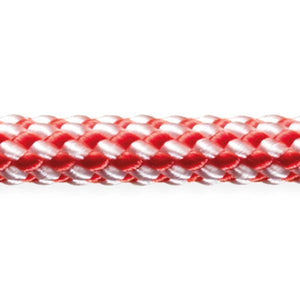 Vendor:Robline
Robline Dinghy Control white/red L=100m
Regular price From €132,80Regular price€132,90-€0,10 Sale price From €132,80 -
-€9,89
 Vendor:Robline
Robline Orion 500 trimming leash, black
Regular price From €97,01Regular price€106,90-€9,89 Sale price From €97,01 -
-€13,39
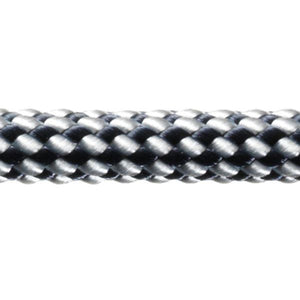 Vendor:Robline
Robline Dinghy Control white/blue L=100m
Regular price From €119,51Regular price€132,90-€13,39 Sale price From €119,51 -
-€7,25
 Vendor:Robline
Robline Orion 500 trim line white/red
Regular price From €64,25Regular price€71,50-€7,25 Sale price From €64,25 -
-€10,89
 Vendor:Robline
Robline Orion 500 trimming leash neon yellow/black
Regular price From €97,01Regular price€107,90-€10,89 Sale price From €97,01


Deine Fragen / Unsere Antworte
- What diameter do I need for my trim line?
- That depends on your existing hardware. Check the recommended line diameter for your blocks and cleats – this is usually stated in the manufacturer's data sheet. As a rule of thumb: lines for light trim functions are often between 4 and 6 mm, while for more heavily loaded systems they are more likely to be 8 to 10 mm.
- What is the difference between a trim line with a Dyneema core and one made of polyester?
- A Dyneema core has significantly less stretch and a higher breaking load for the same diameter. Polyester stretches more but is more resistant to chafing and often cheaper. For applications where precision is crucial – such as on the Cunningham or jib outhaul – a core-rich construction with Dyneema is the better choice.
- Can I also use a trim line as a sheet?
- Technically yes, but trim lines are usually designed for low weight and low stretch, not for the constant movement and abrasion that a sheet is subjected to. For dual use, you should check whether the cover construction and breaking load can withstand the actual load.
- How do I know when a trim line needs to be replaced?
- Look for chafe marks in the cover that can no longer be moved, for discoloration due to UV damage, and whether the cover is shifting unevenly relative to the core. The latter indicates a damaged core – you should replace such lines immediately.