
cordage
Find the right solution for your boat
In Rigging you will find selected products that reliably function in everyday maritime use. Key factors are dimensions, material, and the specific area of application – this information can be found in the product data.
Browse through variations, compare features, and find the version that truly fits your boat.
This way, the equipment fits not only on paper, but also on board.
Discover variants, materials, and designs built for maritime use. This way, you'll find equipment that remains reliable on board – season after season.
Skip to product grid
-
 Vendor:Gotthardt
Gotthardt Sail Needle Set – 5 pieces in different sizes
Regular price €8,50Regular price€8,50Sale price €8,50 -
 Vendor:Gotthardt
Gotthardt Stainless Steel Expander Hooks - for DIY Bungee Cords
Regular price €1,90Regular price€1,90Sale price €1,90 -
 Vendor:Gotthardt
Gotthardt Marlspike – Stainless Steel with Wooden Handle
Regular price From €7,90Regular price€7,90Sale price From €7,90 -
 Vendor:1852
1852 Rubber Lashings with Quick-Clip – Elastic Sail Ties in a Set of 4
Regular price From €4,90Regular price€4,90Sale price From €4,90 -
 Vendor:Gotthardt
1852 Polypropylene flat rope – versatile rope for deck and canvas
Regular price From €4,90Regular price€4,90Sale price From €4,90 -
-€2,52
 Vendor:Gotthardt
1852 Splicing Set – 4 Hollow Needles 6–14 mm + Splicing Needle
Regular price €13,38Regular price€15,90-€2,52 Sale price €13,38 -
 Vendor:Gotthardt
Gotthardt Heat Shrink Sleeves for Rope Ends – Set of 6
Regular price From €7,90Regular price€7,90Sale price From €7,90 -
-€2,00
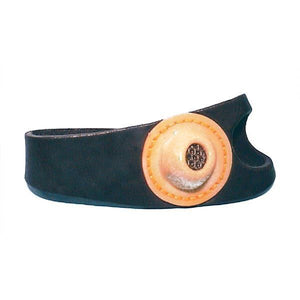 Vendor:Gotthardt
sailmaker's glove
Regular price €37,50Regular price€39,50-€2,00 Sale price €37,50 -
 Vendor:Gotthardt
Gotthardt Crimping Pliers for Staples – secure attachment of wire rope clips
Regular price €89,50Regular price€89,50Sale price €89,50 -
-€1,09

 Vendor:1852
1852 Palby Chafing Gear for Mooring Lines – Rope Chafing Protection 40 × 15 cm
Regular price €18,81Regular price€19,90-€1,09 Sale price €18,81 -
 Vendor:Robline
Robline Leech Line Liekleine D=1.7mm L=10m Carton with 10 rolls red/silver
Regular price €87,50Regular price€87,50Sale price €87,50 -
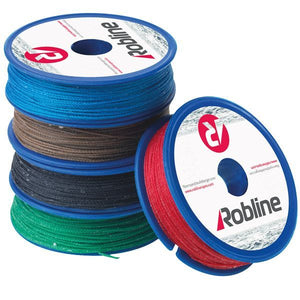 Vendor:Robline
Robline waxed rigging twine D=0.8mm L=80m Box of 10 rolls assorted colors
Regular price €78,50Regular price€78,50Sale price €78,50 -
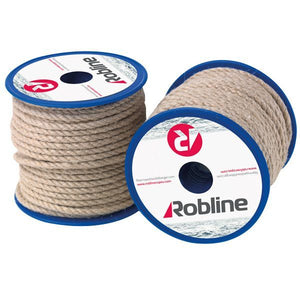 Vendor:Robline
Robline Classic-Tex D=3mm L=15m Carton of 10 rolls sand-colored
Regular price €100,90Regular price€100,90Sale price €100,90 -
 Vendor:1852
1852 Replacement Charger for 1852 Rope Cutter Battery
Regular price €19,90Regular price€19,90Sale price €19,90 -
 Vendor:Robline
Robline Splicing Kit – 4 needles for ropes from 4–10 mm
Regular price €81,90Regular price€81,90Sale price €81,90 -
 Vendor:1852
1852 Replacement Battery 20 V / 2 Ah for Rope Cutter 1397210
Regular price €49,90Regular price€49,90Sale price €49,90 -
-€16,09
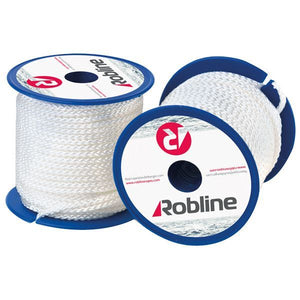 Vendor:Robline
Robline XLF Universal Line D=2mm L=40m Carton of 10 rolls white
Regular price €143,81Regular price€159,90-€16,09 Sale price €143,81


Deine Fragen / Unsere Antworte
- What rope diameter is suitable for mooring my boat?
- That depends on the boat's size, weight, and mooring location. As a general guide: the larger and heavier the boat, the thicker the line. Check the manufacturer's specifications for breaking strength and factor in some reserve – a line that is too thin will wear out faster and be more difficult to handle.
- What is the difference between twisted and braided rope?
- Twisted rope is easier to splice and inexpensive, but it twists under load and runs less smoothly through blocks. Braided rope is better suited for running rigging, such as sheets and halyards, because it runs smoothly and does not twist.
- Can I use polypropylene rope for mooring?
- Technically possible, but not ideal. Polypropylene floats and is UV-sensitive – it becomes brittle faster than polyester. For mooring lines, polyester or nylon are better choices; polypropylene is more suitable for heaving lines and rescue lines.
- How do I know when rope needs to be replaced?
- Broken fibers in the cover, visible core damage, permanent deformation, or stiffening are clear signs. Also, if a line feels noticeably softer or irregular after a strong load – such as a hard shock – you should replace it.