
Engine parts
Keep Your Drive Running Reliably
Correct identification saves time and protects the engine. Serial number, engine type, and year of manufacture are the most important pieces of information.
For propellers, diameter, pitch, and direction of rotation are crucial.
This keeps your drive efficient, economical, and reliable.
Discover variants, materials, and designs built for marine use. This way, you'll find equipment that remains reliable on board – season after season.
Skip to product grid
-
-€47,10

 Vendor:1852
1852 Stainless Steel Exhaust Manifold – Spare Part for Volvo MD21, MD29 & MD32
Regular price €641,80Regular price€688,90-€47,10 Sale price €641,80 -
-€87,38

 Vendor:1852
1852 Stainless Steel Exhaust Manifold – Replacement Part for Bukh DV36
Regular price €397,52Regular price€484,90-€87,38 Sale price €397,52 -
-€14,22

 Vendor:1852
1852 Stainless steel flange – for exhaust pipe bend Bukh DV10/DV20/DV24
Regular price €108,68Regular price€122,90-€14,22 Sale price €108,68 -
-€49,38
 Vendor:1852
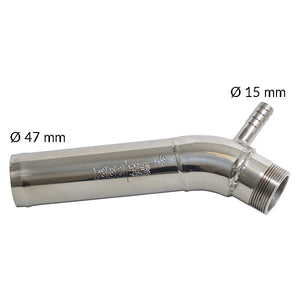
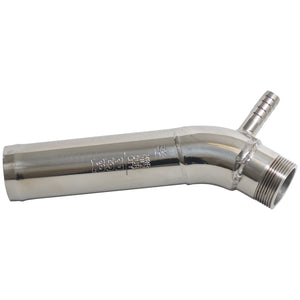
1852 Stainless steel exhaust manifold for Yanmar QM series
Regular price €397,52Regular price€446,90-€49,38 Sale price €397,52 -
-€52,06

 Vendor:1852
1852 Stainless Steel Exhaust Pipe Bend – for Bukh DV10, DV20 and DV24
Regular price €394,84Regular price€446,90-€52,06 Sale price €394,84 -
-€49,74
 Vendor:1852
1852 Exhaust Manifold for Volvo Penta D4 - Stainless Steel (21684826)
Regular price €379,16Regular price€428,90-€49,74 Sale price €379,16 -

 Vendor:1852
1852 Exhaust Manifold for Volvo Penta TAMD42 / TAMD43P / TAMD300 - Cast Iron (861289)
Regular price €259,00Regular price€259,00Sale price €259,00 -
-€49,74
 Vendor:1852
1852 Stainless Steel AISI 316 Exhaust Manifold for Volvo Penta D2 – Complete Kit
Regular price €379,16Regular price€428,90-€49,74 Sale price €379,16 -

 Vendor:1852
1852 Exhaust manifold for Volvo Penta Series 31 + 41 – stainless steel (859963)
Regular price €259,90Regular price€259,90Sale price €259,90 -
-€16,88

 Vendor:1852
1852 Exhaust Manifold for Yanmar 129170-13000 – Stainless Steel A4 (AISI 316)
Regular price €239,02Regular price€255,90-€16,88 Sale price €239,02 -
-€33,24

 Vendor:1852
1852 Exhaust Manifold for Volvo Penta FMD – Stainless Steel AISI 316
Regular price €452,66Regular price€485,90-€33,24 Sale price €452,66 -
 Vendor:1852
1852 Lid & O-Ring for Volvo Penta Exhaust Manifold – Replaces OEM 844093
Regular price €40,90Regular price€40,90Sale price €40,90 -
-€29,28

 Vendor:1852
1852 Exhaust Manifold for Yanmar GM Series – Stainless Steel AISI 316
Regular price €405,62Regular price€434,90-€29,28 Sale price €405,62 -
-€37,46
 Vendor:1852
1852 Exhaust Manifold for Yanmar QM – Stainless Steel 316
Regular price €512,44Regular price€549,90-€37,46 Sale price €512,44 -
 Vendor:1852
1852 Cover & O-ring for Volvo Penta exhaust manifold – Stainless steel A4 (AISI 316)
Regular price €25,50Regular price€25,50Sale price €25,50 -
-€49,58

 Vendor:1852
1852 Exhaust manifold for Yanmar YMS – A4 (AISI 316) stainless steel, D = 21 mm
Regular price €371,32Regular price€420,90-€49,58 Sale price €371,32 -

 Vendor:1852
1852 Exhaust Manifold Kit for Yanmar GM – Stainless Steel A4 (AISI 316)
Regular price €589,90Regular price€589,90Sale price €589,90 -
-€85,10
 Vendor:1852
1852 Exhaust Manifold for Volvo Penta - Stainless Steel AISI 316 (OEM 861289)
Regular price €641,80Regular price€726,90-€85,10 Sale price €641,80


Deine Fragen / Unsere Antworte
- How do I find out which impeller fits my engine?
- The most reliable way is to use your engine's serial number, which you'll find on the nameplate – it's often on the engine mount or in the logbook. With the engine manufacturer, model name, and year of manufacture, the correct impeller can be clearly identified.
- How often should I change the impeller of my outboard motor?
- Most manufacturers recommend changing it every one to two seasons or after approximately 100 to 200 operating hours – whichever comes first. If you run the impeller dry, for example when starting on land, you should check it regardless of the operating time.
- Which sacrificial anodes do I need for my drive, and why are there zinc, aluminum, and magnesium?
- Zinc anodes are the right choice for saltwater, aluminum is suitable for brackish and saltwater and is slightly more active, while magnesium is used exclusively in freshwater. So, the type of anode you need depends directly on your usual cruising area.
- Can I mount a propeller from another manufacturer on my engine?
- Generally yes, if the hub fits the shaft size and keyway of your engine. The crucial factors are diameter and pitch, which must match the engine and hull – an incorrect propeller can cause the engine to not reach or exceed its recommended maximum RPM.