
Engine Instruments & Sensors
Keep track of your course, data, and safety
Navigation and communication are critical for safety and situational awareness. Interfaces like NMEA 2000/0183, suitable transducers, and correct voltage are crucial.
Many systems can be expanded step by step – from a simple display to a fully networked setup.
This way, you get technology that truly supports you and performs well at sea.
Discover variants, materials, and designs built for marine use. This way, you'll find equipment that remains reliable on board – season after season.
Skip to product grid
-
 Vendor:KUS
KUS GPS Speedometer – Speed over Ground, Analog/Digital
Regular price From €114,90Regular price€114,90Sale price From €114,90 -
 Vendor:KUS
KUS Resistance Converter - Signal Converter 0–190 Ω to 240–33 Ω
Regular price €47,50Regular price€47,50Sale price €47,50 -
 Vendor:KUS
KUS Rudder Angle Sender – Potentiometer Sender 0–190 Ω for Rudder Angle Indicator
Regular price €31,90Regular price€31,90Sale price €31,90 -
 Vendor:KUS
KUS Mounting Flange for Tank Sender – 1¼″ BSP Mounting Flange
Regular price €22,90Regular price€22,90Sale price €22,90 -
 Vendor:KUS
KUS Converter – one fuel sender, two gauges
Regular price €41,90Regular price€41,90Sale price €41,90 -
 Vendor:KUS
KUS Rudder Angle Sender – for 2 gauges, 0–190 Ohm
Regular price €39,90Regular price€39,90Sale price €39,90 -
 Vendor:KUS
KUS Adapter for Tank Sensor - 1¼ to SAE-5
Regular price €3,90Regular price€3,90Sale price €3,90 -
 Vendor:KUS
KUS Converter – 4 Analog Tank Sensors to NMEA 2000
Regular price €132,90Regular price€132,90Sale price €132,90 -
 Vendor:KUS
KUS GPS Speedometer – Speed Over Ground, analog/digital
Regular price From €114,90Regular price€114,90Sale price From €114,90 -
 Vendor:KUS
KUS Screw Set for Tank Adapter SAE-5 – Suitable Mounting Kit
Regular price €1,50Regular price€1,50Sale price €1,50 -
 Vendor:KUS
KUS NMEA2000 Programming Unit – Configuration Tool for KUS Tank Sensors
Regular price €123,90Regular price€123,90Sale price €123,90 -
 Vendor:KUS
KUS Sensor for Pitot Log – with 6 m Hose
Regular price €12,90Regular price€12,90Sale price €12,90 -
 Vendor:KUS
KUS Alarm Buzzer - Compact Onboard Alarm for Engine Instruments
Regular price €8,50Regular price€8,50Sale price €8,50 -
 Vendor:KUS
KUS High and Low Level Alarm - Level Alarm for 240-33 Ohm Sensors
Regular price €47,50Regular price€47,50Sale price €47,50 -
-€22,89
 Vendor:BEP
BEP programming software for ultrasonic tank sensors
Regular price €205,01Regular price€227,90-€22,89 Sale price €205,01 -
-€20,69
 Vendor:BEP
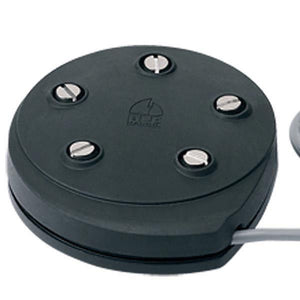
BEP Ultrasonic Tank Sender Unit, Programmable 12/24V
Regular price €185,21Regular price€205,90-€20,69 Sale price €185,21 -
 Vendor:Gobius
Gobius C Ultrasonic Tank Sensor - Non-Contact Level Measurement 12/24 V
Regular price €319,90Regular price€319,90Sale price €319,90 -
 Vendor:Gobius
Gobius 4 Ultrasonic Tank Monitor - 3 Sensors for Holding Tank with LED Display
Regular price €370,90Regular price€370,90Sale price €370,90 -
 Vendor:KUS
KUS Ammeter with Shunt – Current Display 50 A for 12/24V Electrical Systems
Regular price €93,50Regular price€93,50Sale price €93,50 -
 Vendor:KUS
KUS Voltmeter 12 V – Onboard Voltage Display for Panel Instruments
Regular price €27,90Regular price€27,90Sale price €27,90


Deine Fragen / Unsere Antworte
- Do I always have to buy the instrument and sender together, or does any sender fit any instrument?
- Not every sender fits every instrument. The crucial factors are the sender's resistance range and the signal type the instrument expects – these values are not standardized across manufacturers. The safest approach is to buy the instrument and sender from the same manufacturer or carefully check the technical specifications of both components beforehand.
- Which mounting size is most common for round instruments, and how do I correctly measure my existing cutout?
- 52 mm hole diameter is the most common size for marine round instruments. Measure the diameter of the existing cutout in the panel – not the outer diameter of an old instrument – and also pay attention to the required mounting depth behind the panel.
- My tachometer shows incorrect readings. What's causing this and how do I find the error?
- The most common cause is an incorrectly set number of pulses per revolution on the instrument – this must match the installed sender and engine type. Also, check the ground connection and the sender itself with a multimeter before replacing the instrument.
- How do you properly seal a temperature sender or pressure sender during installation?
- PTFE sealing tape on the thread or a liquid thread sealant suitable for coolant and oil are proven methods. Tighten the sender only hand-tight and check for leaks after the first engine start – overtightening can damage the thread in the engine block.