
DC & AC inverters
Stabilize your electrical system with a system
Voltage, power, and battery type must match to keep your system stable.
The sizing of cables and fuses is also important for safe and efficient operation.
This ensures your onboard electronics run reliably – from start to anchor.
Discover variants, materials, and designs built for maritime use. This way, you'll find equipment that remains reliable on board – season after season.
Skip to product grid
-
-€0,10
 Vendor:Sterling Power
Sterling Power ProPower Q Inverter – Modified Sine Wave for Onboard Use
Regular price From €319,80Regular price€319,90-€0,10 Sale price From €319,80 -
-€1,10
 Vendor:Sterling Power
Sterling Power ProPower Q Inverter – Quasi-Sine for Onboard Use
Regular price From €58,80Regular price€59,90-€1,10 Sale price From €58,80 -
-€0,10
 Vendor:Sterling Power
Sterling Power Remote Control with 10m Cable – for Pro Power SB & SBR Basic Inverters
Regular price €53,80Regular price€53,90-€0,10 Sale price €53,80 -
-€3,29
 Vendor:1852
1852 remote control for 1852 inverter
Regular price €28,61Regular price€31,90-€3,29 Sale price €28,61 -
-€0,10
 Vendor:Sterling Power
Sterling Power PS Pure Sine Wave Inverters - 1500 W to 3000 W, 12 V / 24 V
Regular price From €549,80Regular price€549,90-€0,10 Sale price From €549,80 -
-€0,10
 Vendor:Sterling Power
Sterling Power PSRCD Inverter with Built-in RCD - Pure Sine Wave
Regular price From €599,80Regular price€599,90-€0,10 Sale price From €599,80 -
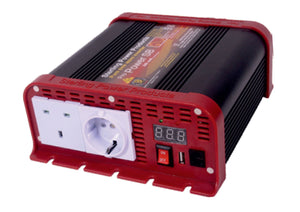 Vendor:Sunbrella
Sterling Sine Wave Inverter Pro Power SB
Regular price From €499,90Regular price€499,90Sale price From €499,90 -
-€0,10
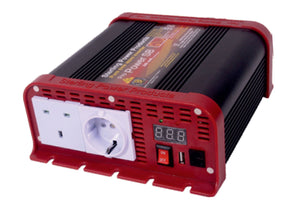 Vendor:Sterling Power
Sterling Sine Wave Inverter Pro Power SIBR +
Regular price From €1.214,80Regular price€1.214,90-€0,10 Sale price From €1.214,80 -
-€0,10
 Vendor:Sterling Power
Sterling Power Pro Power SIBR Sinus Inverter – Pure Sine Wave with Built-in RCD
Regular price From €229,80Regular price€229,90-€0,10 Sale price From €229,80 -
 Vendor:Sterling Power
Sterling Power Pro Power SIB Sine Wave Inverter – Pure Sine, 12V / 24V
Regular price From €159,90Regular price€159,90Sale price From €159,90 -
 Vendor:Mastervolt
Mastervolt AC Master Sine Wave Inverters – Pure Sine, 12V / 24V to 230V
Regular price From €406,90Regular price€406,90Sale price From €406,90 -

 Vendor:Mastervolt
Mastervolt AC Master Remote - Status Display & Remote Control for Sine Wave Inverters
Regular price €58,90Regular price€58,90Sale price €58,90 -
-€1,05
 Vendor:Mastervolt
Mastervolt AC Master Interface – MasterBus Integration for AC Master Inverters
Regular price €189,85Regular price€190,90-€1,05 Sale price €189,85 -
-€16,69
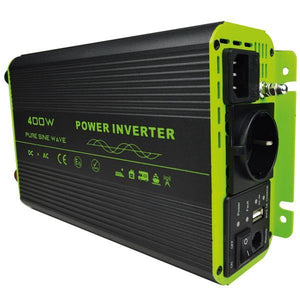
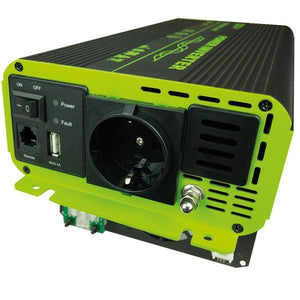 Vendor:1852
1852 inverter 12V pure sine wave
Regular price From €149,21Regular price€165,90-€16,69 Sale price From €149,21


Deine Fragen / Unsere Antworte
- Do I need a pure sine wave inverter or is a modified sine wave sufficient?
- For sensitive electronics such as laptops, chargers with switched-mode power supplies, or medical devices, a pure sine wave is essential. For simple consumers like incandescent bulbs or basic power tools, a modified sine wave may suffice – if in doubt, it's worth choosing a pure sine wave device.
- How do I calculate what power my inverter needs to have?
- Add up the rated power of all devices you want to operate simultaneously and consider the starting current – motors and compressors can briefly draw three to five times their rated load. Choose an inverter that can deliver this peak current for a few seconds.
- Can I also use a rectifier as a battery charger?
- Simple rectifiers only provide a fixed DC voltage and are not regulated chargers – they can overcharge batteries. For charging onboard batteries, you need a regulated charger or an inverter-charger with an IUoU charging characteristic.
- What is the minimum protection class an inverter on board should have?
- In a dry helm station, IP20 is sufficient; near the bilge or in damp lockers, you should choose at least IP43. For outdoor use or direct splash water contact, IP65 or higher is recommended.